The rainy season in the Philippines brings more than frequent downpours and typhoons. For property managers and facility teams, it is a critical time to protect buildings from water intrusion, leaks, mold, façade damage, and safety risks.
Many maintenance problems are only identified after they have disrupted operations. A small roof leak can damage office equipment and interiors. Worn window sealants can allow rainwater to enter occupied spaces. Poor drainage can cause flooding, slippery walkways, and potential liability issues.
The good news is that many of these risks can be reduced—or avoided entirely—with proactive inspections and maintenance.
This rainy season building maintenance checklist can help property managers prepare offices, hotels, condominiums, healthcare facilities, commercial buildings, and mixed-use developments for the wet season.
Heavy rainfall, strong winds, tropical storms, and typhoons can place significant pressure on a building’s roof, exterior walls, windows, drainage systems, and common areas.
Without proper preparation, properties may face:
Preventive maintenance is typically more cost-effective than reactive repairs. Addressing a small issue during a scheduled inspection can prevent water damage, tenant disruption, and more expensive restoration work later.
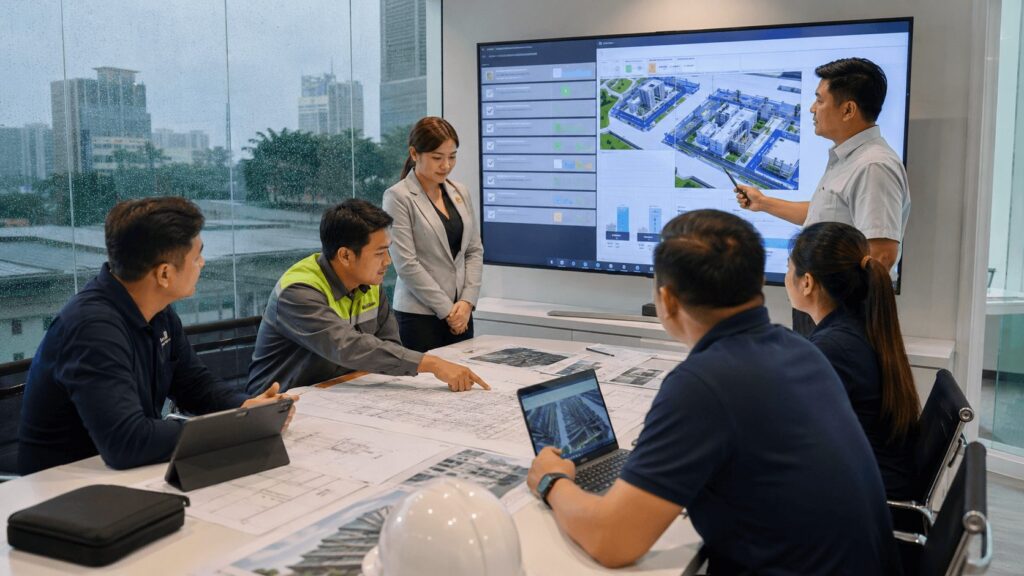
The roof is your building’s first line of defense against heavy rain and severe weather. Before the wet season begins, conduct a detailed inspection of all roofing components.
Look for signs of wear or damage, including:
Even minor defects can allow water to enter the building during prolonged rainfall.
Flat roofs should be inspected for ponding water. Standing water can accelerate material deterioration, increase structural load, and contribute to waterproofing failure.
Ensure roof drains are free of leaves, dirt, debris, and construction materials. Blocked drains are a common cause of roof leaks during heavy rainfall.
A properly maintained drainage system directs rainwater away from the building and helps prevent flooding around entrances, parking areas, and loading zones.
Check gutters for:
Verify that water flows freely through downspouts and is directed away from the building foundation.
Storm drains, catch basins, and other ground-level drainage systems should be cleared of:
Poor drainage can quickly create standing water, access issues, and slip hazards during heavy rain.
Heavy rain and wind can expose weaknesses in a building’s exterior envelope. Regular façade inspections help identify issues before they become major water-intrusion problems.
Look for:
These may indicate that water is entering behind the exterior finish.
Check for:
For high-rise buildings, professional façade inspections are especially important. Specialized teams can safely assess hard-to-reach areas and identify early signs of deterioration.
Learn more about High-Rise Exterior Building Works for façade maintenance, glass cleaning, sealant work, and exterior maintenance support.
Windows are among the most common entry points for rainwater, especially when sealants have deteriorated over time.
Sealants can weaken due to UV exposure, moisture, temperature changes, and normal building movement.
Look for signs such as:
Inspect frames and glass joints for:
A failed sealant may appear minor, but it can lead to interior water damage, mold growth, damaged finishes, and costly repairs. When deterioration is significant, professional window sealant services should be considered.
Exterior glass cleaning is not only about appearance. Clean glass surfaces make it easier to identify developing maintenance issues, including:
For high-rise properties, professional glass cleaning also improves curb appeal and reinforces a positive impression among tenants, guests, clients, and visitors.
Routine cleaning helps maintenance teams spot concerns early, before they become more expensive repairs.
Rainy weather increases the risk of slips, trips, and falls. Property managers should inspect all high-traffic exterior and entry areas before and throughout the rainy season.
Look for:
Check walkways for cracked pavement, loose tiles, damaged floor finishes, and pooling water. Ensure canopies, awnings, and overhangs are in good condition to help protect occupants as they enter and exit the property.
A safer entrance area helps reduce accidents, complaints, and possible liability concerns.
Commercial floor mats are one of the simplest and most effective ways to manage moisture during the rainy season.
A quality matting system can help:
Without proper entrance matting, properties may experience faster floor deterioration, more frequent cleaning needs, and greater slip-and-fall risk.
Commercial floor matting solutions are especially valuable for offices, hotels, healthcare facilities, retail spaces, and other high-traffic properties.
Wet shoes, umbrellas, and increased foot traffic can quickly affect the cleanliness and safety of common areas.
Give added attention to:
Frequent cleaning helps maintain a professional appearance while reducing the buildup of water and dirt.
Elevator floors, buttons, and high-touch surfaces should be cleaned regularly, particularly in busy commercial and residential buildings.
Wet footwear can make hallways slippery and leave behind dirt, moisture, and stains.
Higher humidity can contribute to odor and sanitation concerns. Cleaning schedules may need to be adjusted to maintain a fresh and hygienic environment.
Professional cleaning services can help maintain safe, presentable, and sanitary facilities throughout the wet season.
Moisture intrusion can lead to mold and mildew if it is not addressed promptly. Inspect areas that are prone to trapped moisture, including:
Warning signs include:
Early detection is essential. Addressing moisture issues quickly can help protect indoor air quality, prevent property damage, and avoid more extensive remediation work.
The rainy season also brings the potential for severe storms and typhoons. Property managers should review emergency procedures before weather conditions worsen.
Confirm that contractors, suppliers, building personnel, and emergency response teams can be reached quickly when needed.
Ensure your team has clear procedures for:
Check the condition and readiness of:
Preparation helps reduce downtime, protect assets, and support a faster response when severe weather occurs.
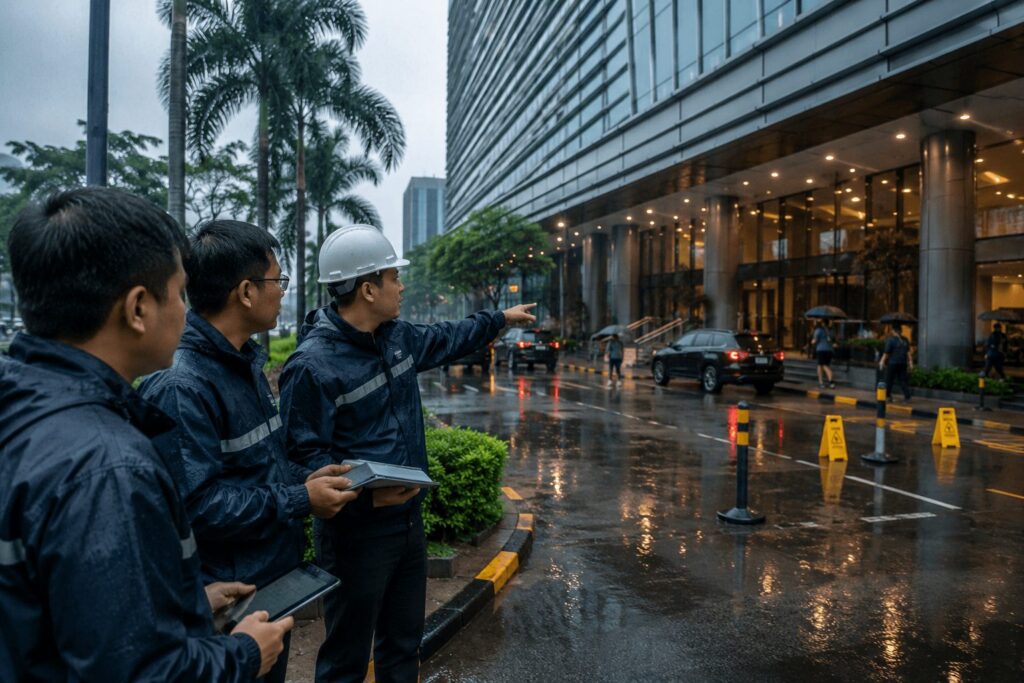
In-house teams can handle many routine inspections and cleaning tasks. However, specialized work often requires trained personnel, proper equipment, and safety procedures.
Consider outsourcing:
Professional maintenance service providers can help ensure the work is completed safely, efficiently, and to the appropriate quality standard.
Deferred maintenance often appears to save money in the short term, but it can create larger expenses when small issues turn into major repairs.
A proactive maintenance program can help property managers:
A small repair completed before the rainy season is usually far less expensive than restoring damaged interiors, replacing equipment, or addressing tenant complaints after a major leak.
Rainy season preparation requires more than a basic checklist. It often involves a combination of preventive maintenance, cleaning, safety improvements, and specialized exterior services.
Hygia Philippines provides integrated facility solutions that help property managers keep buildings safe, clean, and presentable during wet weather.
Hygia supports façade maintenance, exterior glass cleaning, sealant work, and other exterior services that can help reduce water intrusion and protect building exteriors.
Routine and deep-cleaning programs help keep lobbies, hallways, elevators, restrooms, and common areas safe, sanitary, and presentable.
Effective entrance matting helps reduce moisture, dirt, and slip risks while protecting interior flooring.
Rainy weather can create musty odors in enclosed spaces. Ambient scenting solutions can help create a more pleasant experience for tenants, employees, customers, and guests.
By combining preventive maintenance with professional facility services, property managers can protect their buildings while improving safety, cleanliness, and occupant satisfaction.
Whether you're preparing a commercial office, condominium, hotel, healthcare facility, or mixed-use development for the rainy season, proactive maintenance is one of the best investments you can make. From preventive inspections and exterior maintenance to professional cleaning and commercial floor matting, taking action before problems arise can help reduce repair costs, improve safety, and protect your property's long-term value.
If you need expert support preparing your building for the rainy season, contact Hygia to discuss a customized maintenance solution for your property. Our team is ready to help you keep your facility safe, clean, and operating at its best throughout the wet season.
Property managers should begin inspections and preventive maintenance before the peak rainy season, ideally several weeks in advance. This gives the team time to repair roof defects, clear drainage systems, replace damaged sealants, and address safety risks before heavy rainfall or typhoons occur.
Common issues include roof leaks, clogged gutters and drains, water intrusion around windows, deteriorated sealants, mold growth, slippery entrances, and flooding in parking or loading areas. Early inspections help prevent these small issues from becoming costly repairs.
Commercial entrance mats trap water, mud, and debris before they reach interior flooring. This reduces slip-and-fall risks, protects floor finishes, lowers cleaning requirements, and helps keep lobbies and entrances presentable during wet weather.
Drainage systems should be checked before the rainy season and inspected regularly during periods of heavy rainfall. Properties surrounded by trees, construction activity, or high levels of debris may require more frequent cleaning to prevent blockages and flooding.
Specialized work such as high-rise façade inspections, exterior glass cleaning, rope-access maintenance, window sealant replacement, waterproofing repairs, and exterior painting should be handled by qualified professionals. These tasks require proper access equipment, safety procedures, and technical expertise.