A brand identity is more than a logo - it’s a living, breathing experience. And one of the most powerful ways to bring that identity to life is through interior branding. In the Philippines, where face-to-face interaction and customer perception still play a major role in decision-making, branded environments offer businesses a chance to build stronger emotional connections, reinforce their company values, and stand out in competitive industries.
Whether you’re designing a corporate office in Cebu, a retail store in Manila, or a hospitality space in Davao, interior branding isn’t just about aesthetics. It’s about telling your story through space.
Key Takeaways:
Interior branding is the process of translating a brand’s identity into its physical environment. It combines elements of visual branding, experiential design, and architectural finishes to communicate your company ethos through surfaces, signage, colors, materials, and spatial layout.
From wall graphics and vinyl wall wraps to custom wall murals and feature walls, interior branding extends far beyond just what’s on the walls. Flooring materials, ceiling designs, branded furniture, architectural finishes, lighting systems, digital screens, wayfinding signage, scent marketing solutions, and even acoustic treatments all play a crucial role in communicating business identity.
Every design choice - down to the materials, colors, and sensory cues - works together to create a unified brand atmosphere that customers and employees encounter throughout the space. This holistic approach ensures that your brand’s story is told through every detail, not just what’s seen at eye level.
In the Philippines, brand loyalty is deeply tied to customer experience. A well-designed business interior doesn’t just look good - it makes people feel something. That emotional connection drives trust, engagement, and retention.
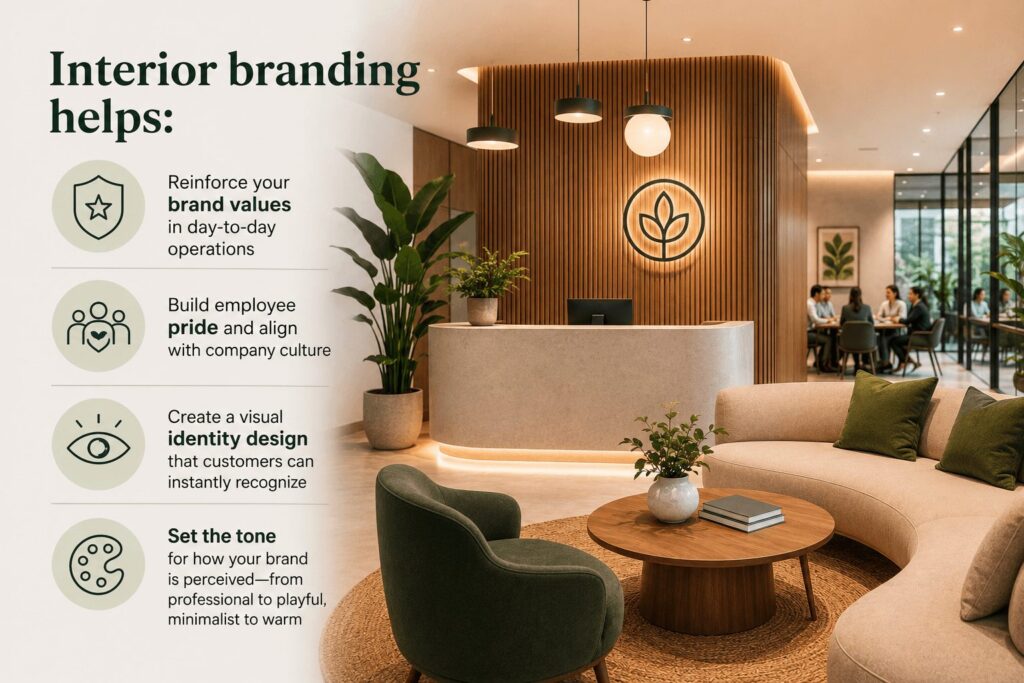
Interior branding helps:
Spaces that align with brand identity positively influence user experience and brand recall. Locally, this aligns with how customers often associate ambiance and décor with service quality - especially in industries like hospitality and retail.
In corporate settings, interior branding becomes a key driver of both professionalism and productivity. An office should reflect the company’s mission, not just in presentation decks—but on its walls, hallways, and meeting spaces.
Through workspace identity and corporate interior identity, businesses can foster a culture of belonging and alignment. Elements like:
… all contribute to a workspace that not only functions well but also communicates your unique identity.
In Cebu and other major business districts, companies are investing in office personalization not just for aesthetics, but to boost morale, reduce turnover, and support hybrid work models that rely on strong internal culture.
Shoppers today don’t just buy products - they buy experiences. In malls across Metro Manila and retail districts like Cebu’s Ayala Center, retail interior branding directly influences purchasing behavior.
Using wall branding, environmental graphics, and interactive design features, retailers can:
Imagine walking into a store with bold custom wall murals, textured vinyl wall wraps, and cohesive lighting - every detail tells you what the brand stands for before you even speak to a salesperson. This is the power of intentional space identity.
In hotels, cafés, and resorts across the Philippines, hospitality interiors rely heavily on ambiance to deliver memorable guest experiences. Interior branding ensures that from the lobby to the restrooms, your space tells a unified story.
Key branding tools in hospitality spaces include:
A well-branded hospitality space doesn’t just please the eyes - it connects emotionally. It makes the guest feel immersed in the brand's values and personality.
Interior branding involves a variety of elements that must work together to support your brand expression:
Large visuals that bring your story, mission, and core values to life. These may include inspirational artwork, branded illustrations, or even timeline walls depicting company milestones.
Selecting and consistently applying brand-approved colors across paint, fabrics, furniture, and decorative accents helps reinforce recognition and emotional associations with your brand.
Architectural finishes, such as textured vinyl, wood laminates, glass films, acoustic panels, and durable surface materials, can be customized to echo your brand’s personality while providing practical benefits like sound control and longevity.
Strategic lighting not only sets mood but can highlight key brand elements, define zones within an open space, or draw attention to feature walls and displays.
Directional, informational, or motivational signage should blend seamlessly with the environment and use typography, iconography, and taglines that reflect brand voice.
Patterned carpets, branded floor decals, or statement ceiling treatments (like suspended structures, lighting sculptures, or color blocks) extend branding to often-overlooked surfaces and enhance the overall spatial experience.
Custom upholstery, logo-embossed partitions, and signature furniture pieces offer both function and a sensory link to your brand.
Screens and installations can deliver brand messaging, showcase company culture, and keep branding fresh with changeable content.
Curated fragrance diffusers or natural scents add a powerful, immersive touch, helping visitors and staff form positive emotional associations with the space.
Wall panels, baffles, or branded sound-masking solutions ensure comfort and reinforce visual consistency.
Maintaining a spotless environment (including regular professional cleaning) supports a brand's promise of quality and care, especially in hospitality, health, and retail sectors.
By combining these elements, you ensure that every visual, tactile, and sensory aspect of your physical space consistently communicates your brand identity, offering an environment that is memorable, meaningful, and uniquely your own.
Making sure your interior branding is safe and compliant isn’t just a box to check—it’s a must for every business in the Philippines. Beyond visual impact, every branded environment must conform to national and local regulations to safeguard occupants and enhance credibility. This starts with strict adherence to fire safety and the National Building Code of the Philippines, as well as the Philippine Green Building Code which sets standards for sustainability, energy efficiency, indoor environmental quality, and the responsible use of materials. For example, feature walls and custom installations must never obstruct emergency exits or fire equipment, and all materials used should comply with local fire rating standards and green building requirements.
Materials play a critical role as well. The use of non-toxic, low-VOC, and, whenever possible, sustainable construction and finish materials is encouraged to safeguard both worker and occupant health, as aligned with the Green Building Code. Property managers or local authorities may require certifications or supplier documentation verifying compliance.
Accessibility is another essential pillar. Under the Philippine Accessibility Law, signage must be clearly visible, properly illuminated, and installed at accessible heights for all users, including persons with disabilities. Finally, all vinyl graphics, wall wraps, and installed features should follow Occupational Safety and Health Standards to ensure they are securely affixed and safe for high-traffic commercial use.
Following these Philippine standards not only ensures legal compliance but also projects a responsible, professional brand image to clients, guests, and staff.
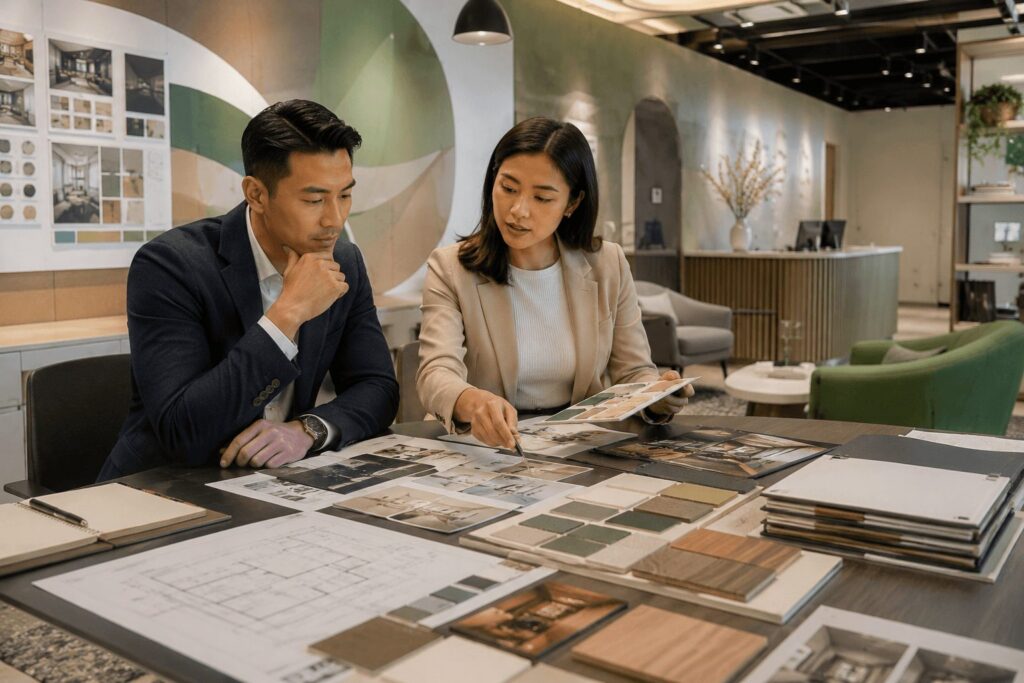
Take time to clearly define what your brand stands for. Identify your core mission, vision, and guiding principles. Ask yourself what feelings or memories you want customers and staff to associate with your brand. These values should serve as the foundation for every design decision.
Walk through your facility with a critical eye. Does your current layout, décor, and signage express your brand’s personality? Note any mismatches between your brand promise and the physical experience. Identify areas that are generic, dated, or lacking in branded elements, as well as places where your company story and values could be communicated more strongly.
Engage branding and interior design professionals who specialize in creating cohesive, impactful brand environments. These experts can help translate your vision into effective spatial solutions, recommend the best materials and technologies, and ensure your ideas are both functional and compliant with local regulations.
Ensure that every detail, from wall graphics and directional signs to furniture, color schemes, and ambient scents, reflects your brand identity. Consistent use of visual and sensory cues across surfaces, spaces, and touchpoints builds a sense of trust and reinforces your message at every step of the customer journey.
Roll out your updated branding elements thoughtfully, then gather feedback from staff and customers. Track how the space is used and perceived over time. Be willing to adjust, refresh, or add elements as your brand evolves or as you discover new ways the physical space can serve your goals. Treat your interior branding as a living investment that grows alongside your business.
When every detail - from design element to maintenance - supports your brand, your space tells a story that lasts. Combining intentional design with Philippine compliance creates authentic, memorable experiences. Once your brand is present in every corner, keep it fresh and impressive with dependable support.
At Hygia, we help you maintain your branded environment with a full range of specialized facility services - including professional office cleaning and carpet cleaning, window tinting, vinyl wrapping for surfaces, ambient scenting, and commercial matting solutions.
Let your interiors work harder for your brand. Reach out to Hygia for a comprehensive assessment and discover how our expert team can help you keep your business spaces clean, polished, and brand-aligned—so every impression is a lasting one.