Cebu’s wet season can be tough on office facilities. Even with regular sweeping, mopping, and vacuuming, many workplaces notice the same problems once rainy days become more frequent: damp carpets, musty odors, muddy footprints, stubborn stains, and a lobby that looks dirty only a few hours after cleaning.
For offices, BPOs, clinics, hotels, retail spaces, and commercial buildings in Cebu City and Metro Cebu, carpets do more than improve the look of a space. They affect comfort, cleanliness, safety, and the impression your business gives to employees, clients, and visitors.
According to PAGASA, the Philippines generally experiences a rainy season from June to November, which means commercial facilities need to prepare for months of heavier moisture, higher humidity, and more dirt being tracked indoors.
That is why wet-season carpet maintenance should not be treated as a minor housekeeping task. It should be part of a broader workplace cleaning and facility maintenance plan.
Office carpets absorb more than what people can see on the surface. During rainy months, employees and visitors bring moisture, mud, soil, pollutants, and debris into the workplace through shoes, umbrellas, bags, carts, and equipment.
In high-traffic commercial spaces, this buildup happens quickly. Reception areas, hallways, meeting rooms, pantry areas, elevators, and workstations can all become problem zones if carpets are not cleaned properly and consistently.
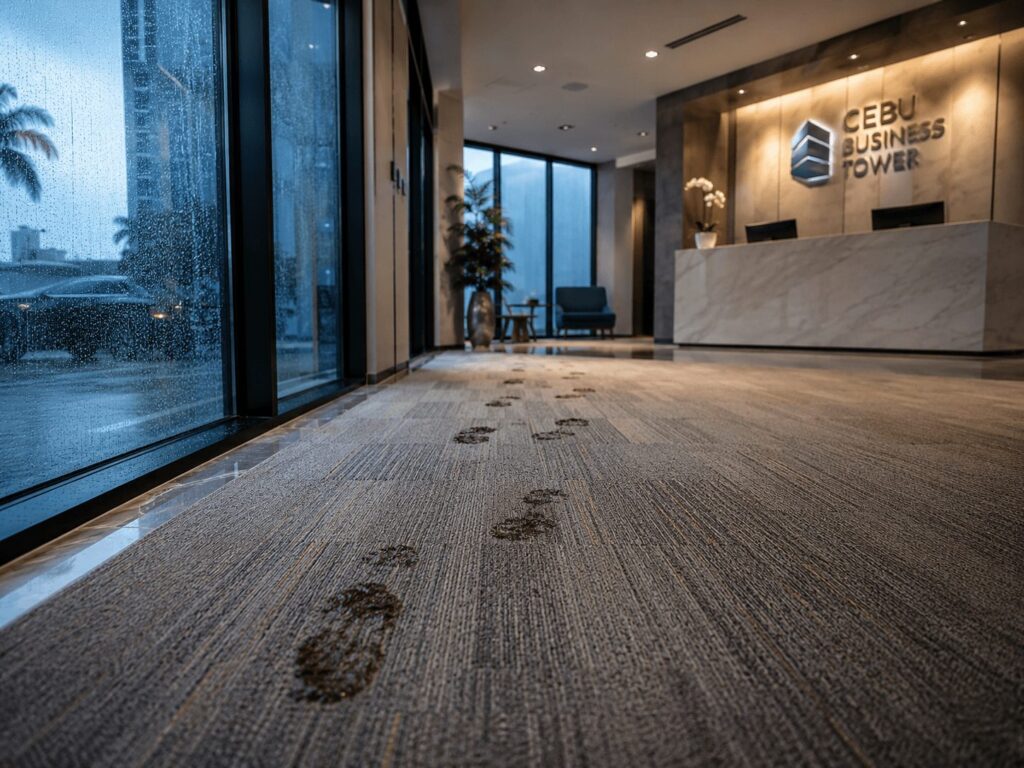
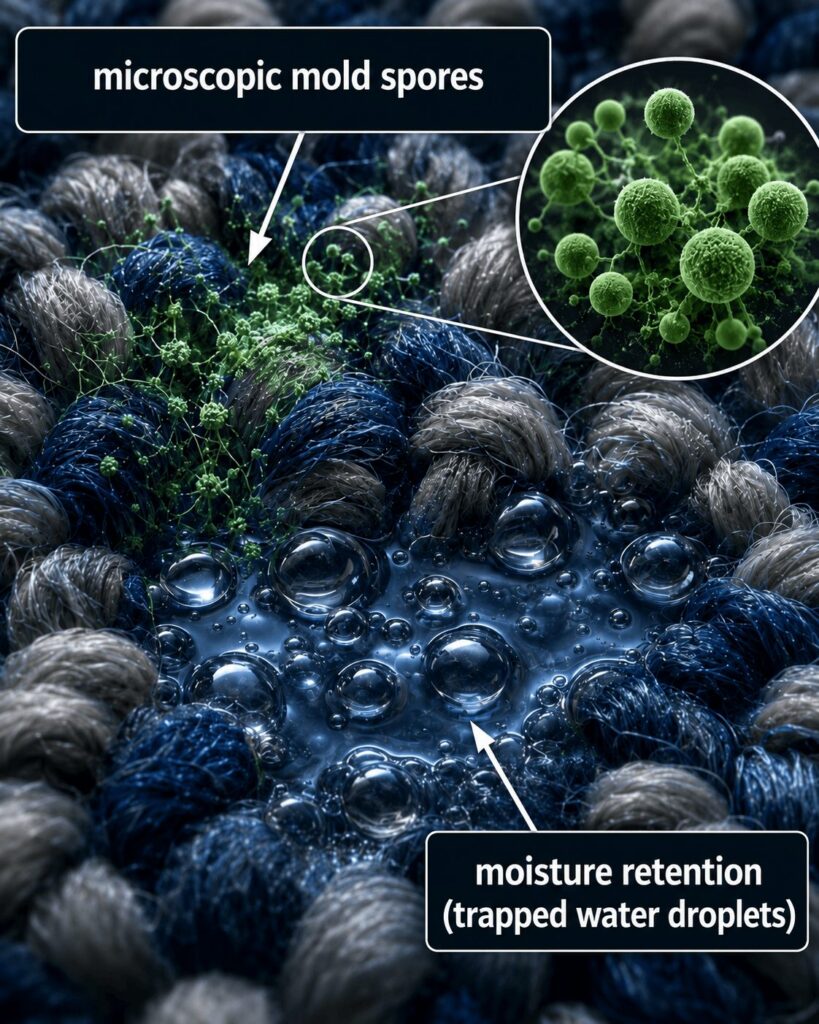
The main issue is moisture. When carpet fibers become damp, dirt sticks more easily. Once dirt settles deeper into the carpet, regular vacuuming may remove surface dust but not the embedded residue underneath.
This is why an office carpet can still smell unpleasant or look dull even after daily cleaning.
High-traffic office carpets do a lot of heavy lifting, but during the rainy season, they take a serious beating. While daily cleaning keeps the surface looking passable, the real threat is what gets left behind.
One of the most common complaints during Cebu’s wet season is a musty smell inside the office.
This usually happens when moisture gets trapped in carpet fibers or backing. Once dampness combines with dirt, spills, food crumbs, and foot traffic residue, odors can become more noticeable—especially in enclosed offices with limited airflow.
The CDC recommends keeping indoor humidity as low as possible and no higher than 50% to help reduce mold growth risk. For commercial spaces, this highlights why moisture control and proper cleaning matter during rainy months.
A scented office may smell better temporarily, but odor control should start with removing the source of the problem. Professional carpet cleaning helps address deep-seated dirt and odor-causing buildup that basic vacuuming cannot fully remove.
Office entrances take the most abuse during wet season. Employees, clients, suppliers, and visitors often step inside with wet shoes, bringing mud and street residue into lobbies and reception areas.
If there is no proper matting system, this dirt spreads from the entrance into hallways, carpets, work areas, and meeting rooms. Over time, carpets near entrances may appear darker, stained, or worn out compared to the rest of the office.
This can affect brand perception. A dirty-looking entrance can make a business feel poorly maintained, even if the rest of the facility is clean.
During wet season, indoor areas may take longer to dry because of humidity and reduced ventilation. Damp carpets are harder to maintain because they can continue holding moisture even after the surface looks dry.
This is especially important for offices that use DIY carpet cleaning methods or excessive water when spot-cleaning stains. If carpets are not dried properly, the result may be a worse odor problem and possible moisture-related damage.
The EPA recommends keeping indoor humidity below 60%, ideally between 30% and 50%, to help manage moisture indoors. For offices in humid urban areas like Cebu City, this makes ventilation, air conditioning, cleaning frequency, and moisture control important parts of facility maintenance.
Carpets in busy offices collect dirt faster during rainy months because more contaminants are carried indoors. This is especially true for:
In these environments, waiting too long between carpet cleaning schedules can make stains harder to remove and carpets more expensive to restore.
A professional cleaning plan helps maintain carpet appearance before dirt becomes deeply embedded.
Vacuuming is important, but it has limits.
A vacuum can remove loose dust, crumbs, hair, and surface debris. However, during wet season, the problem is often deeper. Moisture can push dirt into the carpet pile and backing. Spills, mud, and damp residue can also cling to fibers in ways that dry vacuuming cannot fully address.
This is why some offices experience the same issues repeatedly:
When this happens, the issue is no longer just surface dirt. It is a maintenance problem that requires a more thorough cleaning approach.
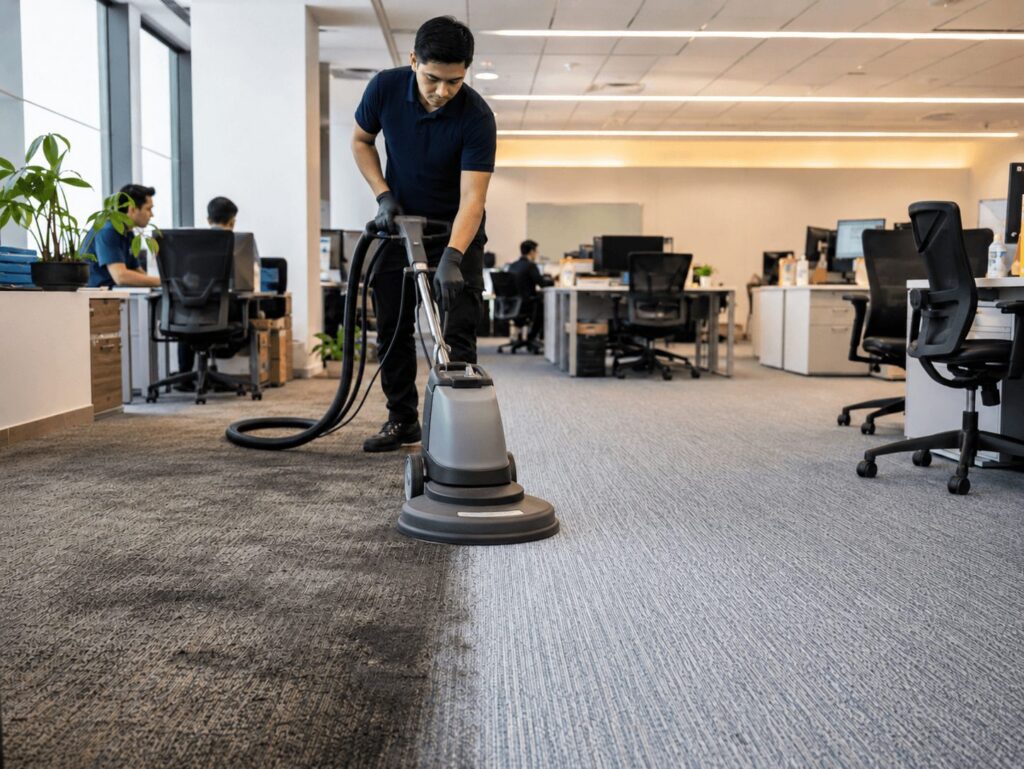
Hygia’s professional cleaning services can help offices manage carpet cleaning as part of a complete workplace cleaning program, including routine office cleaning and deeper carpet care.
Professional carpet cleaning is not only about making carpets look better. For commercial spaces, it supports workplace hygiene, employee comfort, customer experience, and long-term cost control.
Wet season dirt can settle below the surface of the carpet. Professional cleaning helps remove deeper buildup that regular cleaning tools may miss.
This is especially useful for offices with carpeted hallways, conference rooms, executive areas, and shared workspaces.
Musty carpet odors can affect how employees and visitors experience the workplace. Professional cleaning helps address odor at the source by removing trapped dirt, moisture residue, and organic buildup.
This is important for offices that regularly welcome clients, applicants, partners, or guests.
Commercial carpets are not cheap to replace. Poor maintenance can make carpets look older faster, especially in high-traffic areas.
A proper cleaning schedule can help extend carpet life and delay costly replacement.
Indoor air quality matters in workplaces. OSHA notes that poor indoor air quality has been associated with symptoms such as headaches, fatigue, difficulty concentrating, and irritation of the eyes, nose, throat, and lungs.
While carpet cleaning is only one part of indoor environmental management, keeping carpets clean and dry can support a more comfortable workplace.
There is no single schedule that works for every office. Cleaning frequency depends on foot traffic, carpet condition, building layout, ventilation, and the type of business.
As a practical guide:
The key is to avoid waiting until the carpet smells bad or looks visibly dirty. By that time, dirt and moisture may already be affecting the carpet below the surface.
Don't wait for mud stains and musty odors to take over your workspace. Implementing a proactive defense plan is the most effective way to protect your flooring investment and maintain a healthy indoor environment. Use these straightforward, preventative steps to keep Cebu's heavy rains from ruining your office carpets.
A good matting system is one of the simplest ways to reduce carpet dirt. Place mats at main entrances, secondary doors, elevator access points, and areas where people transition from outdoor to indoor spaces.
This helps capture water and debris before they reach the carpet.
Not all parts of the office need the same cleaning frequency. Focus more attention on walkways, reception areas, pantry entrances, meeting rooms, and areas near restrooms.
These spaces usually collect more moisture and dirt during wet season.
Small spills can become bigger problems when ignored. During rainy months, damp spots should be dried and cleaned quickly to prevent odors and staining.
Avoid over-wetting carpets during spot cleaning. Too much water can make the problem worse if the carpet does not dry properly.
Airflow helps reduce trapped moisture. Offices should check ventilation, air conditioning performance, and areas where humidity tends to build up.
This is especially important in enclosed rooms, carpeted meeting spaces, and storage areas.
Carpet care works best when combined with routine office cleaning. Dusty desks, dirty floors, overflowing bins, and poorly maintained entrances all contribute to the overall cleanliness problem.
A complete maintenance plan can help keep the workplace cleaner for longer.
Your office may need professional carpet cleaning if you notice:
These are signs that regular cleaning may no longer be enough.
For businesses in Cebu City, Mandaue, Lapu-Lapu, Talisay, Cebu Business Park, IT Park, and other parts of Metro Cebu, professional carpet maintenance can help protect both the workplace environment and the company’s image.
Office carpet problems are not only cleaning concerns. They affect business operations.
A dirty or musty office can create a poor first impression. It can make employees uncomfortable. It can make clients question how well a facility is managed. It can also increase long-term maintenance costs if carpets wear out faster than expected.
For facility managers and admin teams, the goal is not simply to react when carpets become dirty. The better approach is prevention: reduce dirt at the entrance, clean carpets before buildup becomes severe, control moisture, and maintain a consistent cleaning schedule.
This approach helps businesses save time, protect assets, and maintain a professional workplace throughout the wet season.
Cebu’s wet season makes office carpet maintenance more challenging, but the problem is manageable with the right plan.
By combining regular office cleaning, professional carpet cleaning, commercial matting, moisture control, and odor management, businesses can maintain a cleaner, safer, and more welcoming workplace—even during rainy months.
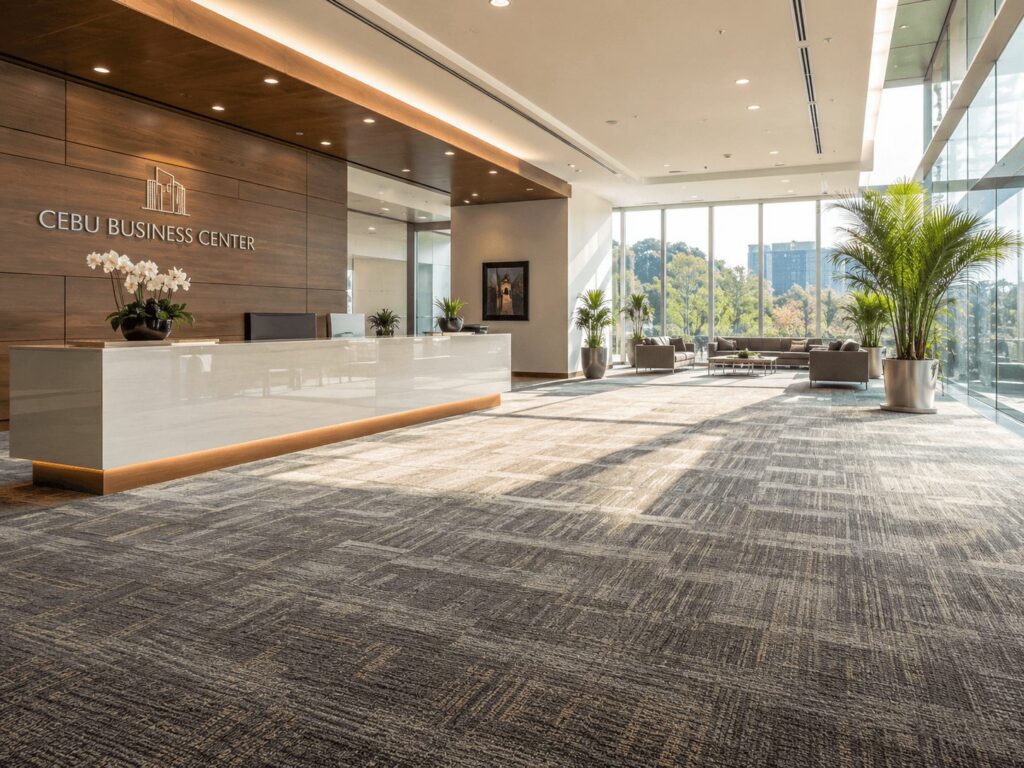
Hygia Philippines Inc. provides professional cleaning services for offices and commercial facilities in Cebu. For businesses that want a more complete facility solution, Hygia also offers commercial floor mats, ambient scenting, window film installation, high-rise glass cleaning, and vinyl finish installation.
Need help keeping your office carpets clean during Cebu’s wet season? Contact Hygia to schedule professional carpet cleaning services for your workplace.
Office carpets often smell bad during rainy season because moisture, mud, and dirt are tracked indoors more frequently. When moisture stays trapped in carpet fibers, it can lead to musty odors and deeper buildup.
Vacuuming helps remove surface dirt, but it may not remove embedded soil, moisture residue, stains, or odor-causing buildup. Offices with heavy foot traffic usually need periodic professional carpet cleaning.
Offices can reduce stains by using commercial entrance mats, cleaning high-traffic areas more frequently, addressing spills quickly, and scheduling professional carpet cleaning before stains become severe.
The right schedule depends on foot traffic, office size, carpet condition, and wet season exposure. High-traffic offices, BPOs, clinics, and commercial facilities may need more frequent cleaning during rainy months.
Commercial matting can reduce dirt and moisture at entrances, while ambient scenting can help improve the overall office experience after cleaning. Routine office cleaning also supports better carpet maintenance.